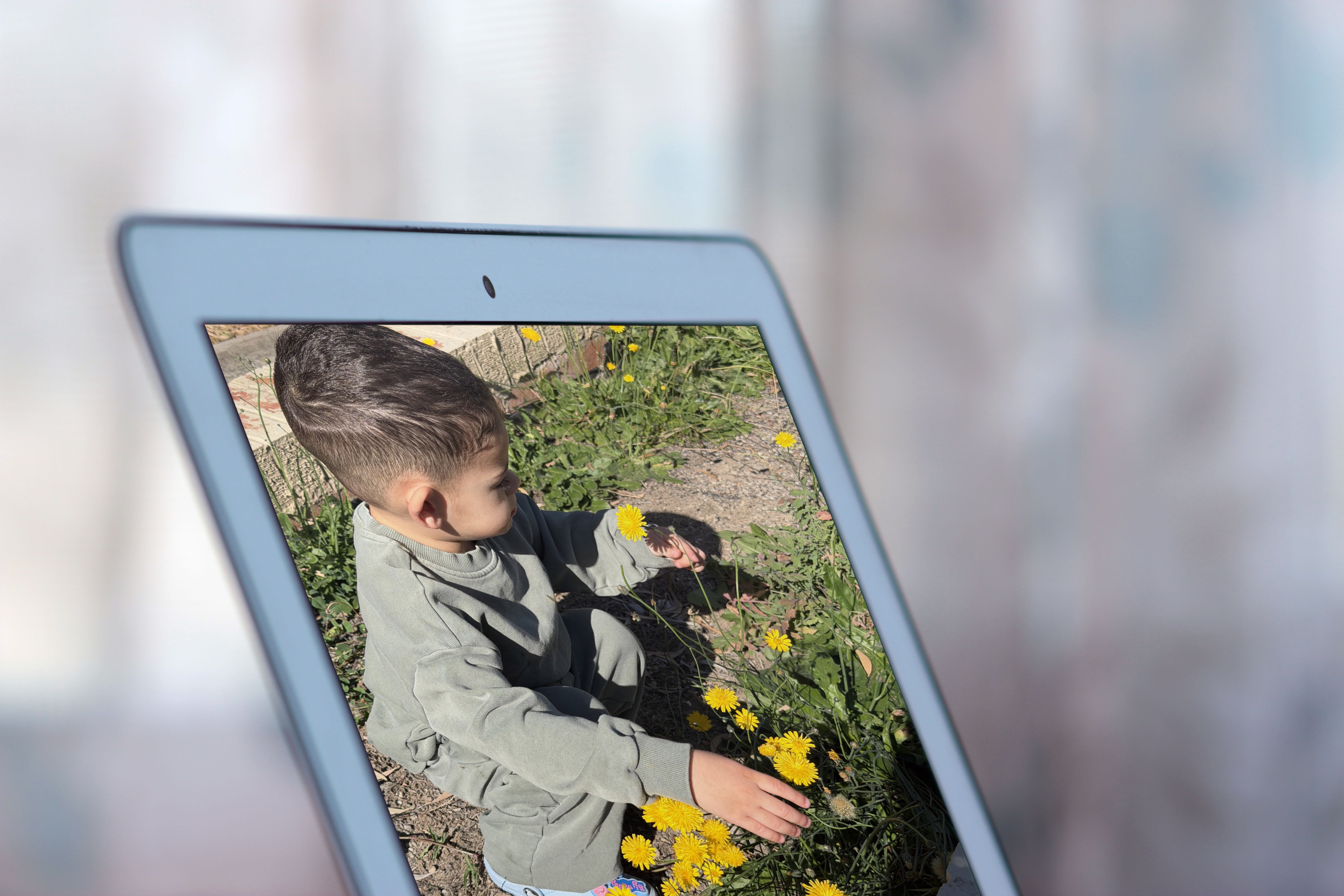
It's no secret that many educators feel overwhelmed by the number of photos taken of children. And it isn't only the click of the camera. It's the downloading, the sorting, the writing and the sending to families, one image at a time, until the day is gone.
Photos can show us parts of a child's world that words can't reach. Words can show us what a photo can't hold. It was never a competition between the two. Both have earned their place as powerful ways to communicate. The trouble starts when we swing from one extreme to the other. Before you take a photo, it helps to pause and ask yourself three questions:
- Does the photo tell a story on its own? Does it show a child thinking, wondering, learning or deeply engaged?
- Is the photo ethical? Does it show the child in a way that respects them and their identity?
- Was consent sought? Have families agreed, and where possible, have children been asked too?
These questions sharpen our purpose, but they don't make the pile of photos any smaller. You can't go from 100 to 0 overnight, and you shouldn't try. What you can do is take a small, steady crawl towards something more manageable. Here are some places to start.
Small steps towards fewer, better photos
- Choose one moment, not many. Rather than capturing every step of an experience, wait for the moment that holds the meaning.
- Set a gentle limit. Agree as a team on a rough number of photos per day or per experience, then reduce it slowly over the term.
- Put the camera down for one experience each day. Be fully present, and notice what you see when you're not looking through a lens.
- Let words carry some of the load. Record a child's exact words, a quick observation or a simple sketch in place of a photo.
- Invite children to choose. Ask them which photo best tells their story, or hand them the camera now and then.
- Curate, don't collect. Set aside a regular time to delete duplicates and keep only the images worth keeping.
- Bring families with you. Explain that you're choosing quality over quantity, and ask them what they most want to see.
- Reflect together. At team meetings, look at a week's worth of photos and ask: what are we capturing, and why?
Fewer photos doesn't mean less noticing. Often it means more. When we stop trying to capture everything, we make room to see what matters. Start small, go slowly, and trust that each step brings you closer to being with children instead of behind the camera.